
Rozwiązania i Komponenty dla AutomatykiSolutions and Components for Automation
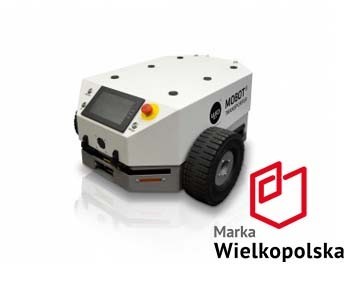
Autonomous mobile robots MOBOT® TRANSPORTER are equipped with two-wheel drive, differential and natural LMS navigation. Works with a load capacity of 100 to 500 kg.
 working time up to 80 minutes on a single charge
 maximum towable weight up to 1500 kg
 Wi-Fi communication
 maximum speed 5 km/h
 dimensions 1029 x 818 x 479 mm
 LMS system
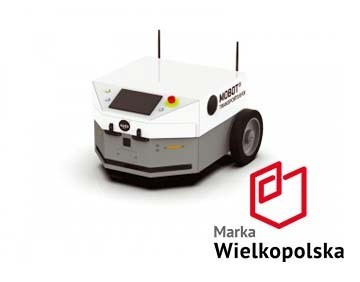
 operating time up to 8 h on a single charge
 payload up to 100 kgWi-Fi communication
 maximal speed 5,65 km/h
 dimensions 787,5 x 593/645 x 360 mm LMS system of autonomous laser navigation working time up to 8 h one charge
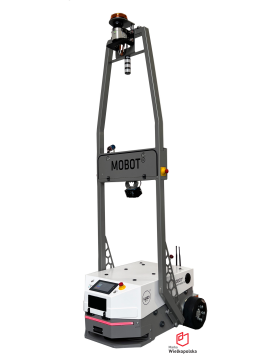
 pull capacity up to 500 kg Wi-Fi communication maximum speed 5.65 km / h dimensions 685 x 674/732 x 418 mm LMS system
Autonomous mobile robots MOBOT ® TRANSPORTER are intelligent vehicles used to automate transport and logistics.
Modern AMR mobile robots by WObit are an important element of the concept of Industry 4.0 in the field of intralogistics.
The task of mobile robots is autonomous transport of cargo between designated points.

The robot navigates using a terrain laser mapping system (LMS) - the robot is equipped with laser sensors and a mapping system of objects in space, making it fully autonomous and intelligent. This method is fast and flexible in implementation, it does not require modification of the existing environment,

Autonomous mobile robots MOBOT® TRANSPORTER safely maneuver among people and bypass obstacles moving in the areas of production, warehouse, corridors and other spaces inside buildings.
MOBOT® TRANSPORTER mobile robots are equipped with laser space scanners with safety function and other sensors. While driving, MOBOT® scans the surroundings on an ongoing basis, tracking all events in real time. Warning and safety zones are programmed in the scanner, which is why the robot can react appropriately, slowing down or stopping completely, or bypassing an obstacle in case of adequate space on the route.

MOBOT® TRANSPORTER self-driving transport robots are easily retrofitted with various robot-mounted modules with convenient mounting holes.
The robot can be adapted to your load quickly and easily by attaching a roller conveyor, pallet transport adapter, gravity conveyor, cuvettes, containers, frames, load lifting system, robotic arm - everything your application requires.
These modules can be easily replaced, which allows the use of MOBOT® robots for various tasks in your company.
Are you interested in our offer? Do you want to ask a question to our adviser?
Call +48 61 22 27 422 or use the contact formuse the contact form